
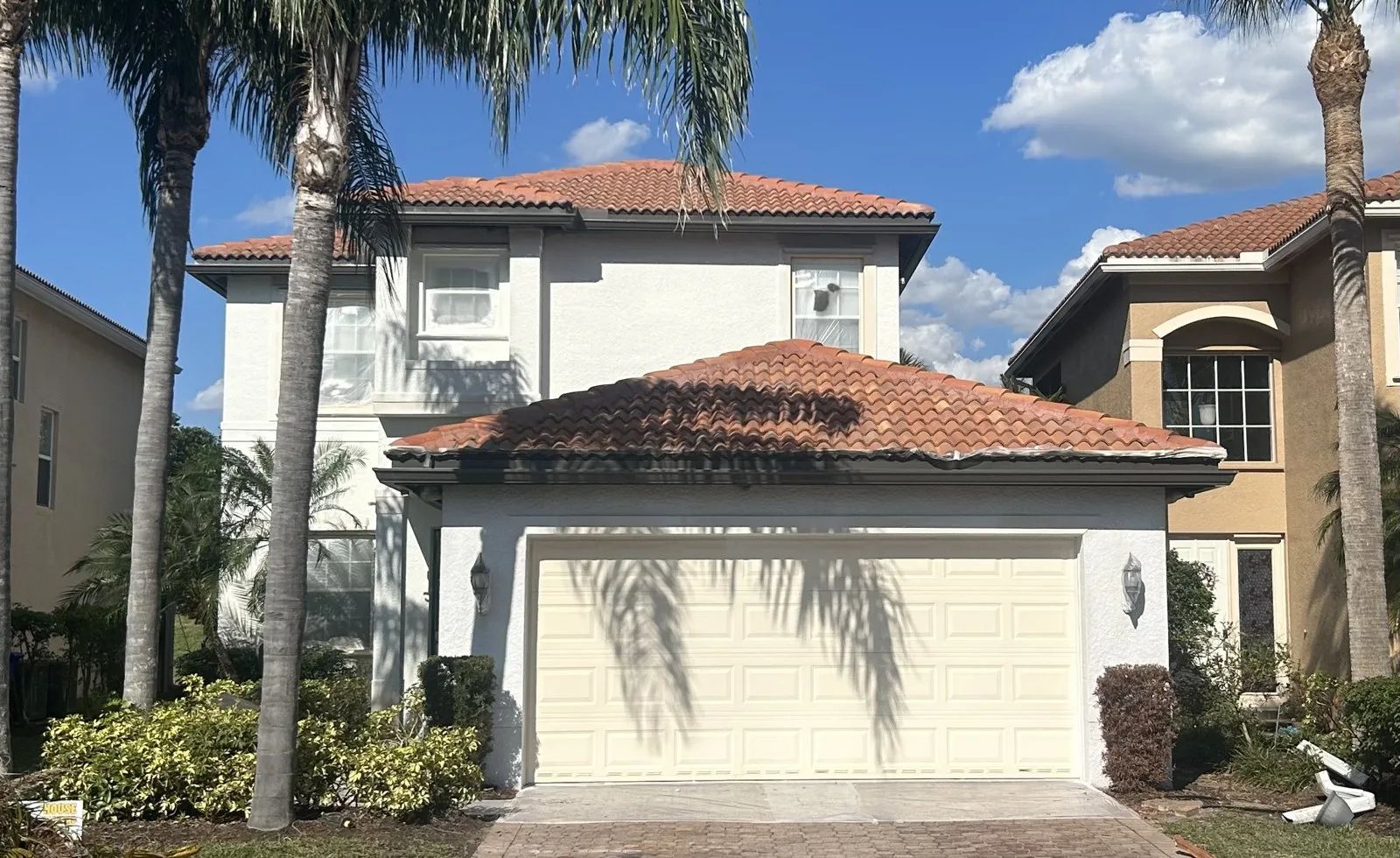
Repaint your Southwest Florida home when the existing finish is losing adhesion or weather protection—not just because a certain number of years has passed. Peeling, recurring blisters, heavy chalking, and failing joints deserve an inspection; dry weather helps with scheduling, but the wall’s condition decides the work.
- When to repaint your house exterior in Southwest Florida depends on coating condition, moisture, and surface preparation.
- Peeling or recurring blisters need diagnosis before another coat goes on.
- Light chalking can sometimes be cleaned; it does not automatically mean a full repaint.
- Plan around dry surfaces and the coating’s weather requirements, not the calendar alone.
For a Fort Myers, Cape Coral, or Naples homeowner planning exterior maintenance in 2026, the useful question is simple: does the house need cleaning, a repair, or a complete repaint? This guide explains how to tell the difference before requesting an estimate.
Why this matters
A faded wall and a peeling wall are different problems. One can be mainly cosmetic; the other means the paint is no longer holding where it should.
Painting over an unresolved problem does not remove it. Moisture behind a coating, loose material beneath it, or a failed joint can undermine the next finish too. Start with an inspection and a written scope—not a color chart.
Sergeant Painters provides residential exterior painting in Southwest Florida, with careful prep and a final walkthrough. Sergeant Painters is a local exterior painting option for homeowners who want surface preparation explained before the work begins.
When should you repaint your home’s exterior in Southwest Florida?
Repaint when cleaning and targeted maintenance will no longer leave a sound, protective finish. The strongest warning signs are paint that is lifting, exposed areas where the coating has failed, and deterioration spread across multiple walls.
Use this checklist from ground level. Leave ladder work, roof access, and loose or unstable surfaces to a qualified professional.
| What you notice | What it tells you | Sensible next step |
|---|---|---|
| Faded color, with paint still firmly attached | The appearance has changed; failure is not established | Clean an appropriate test area and assess the finish |
| A light powder on your hand or cloth | The coating is chalking or the surface carries residue | Clean, let dry, and reassess before choosing prep |
| Widespread peeling or flaking | The coating has lost adhesion | Find the cause and remove unsound material before repainting |
| Bubbles that return after repairs | The original cause has not been resolved | Investigate moisture and coating conditions |
| Open joints or deteriorated sealant | The joint needs attention | Identify the correct repair without blocking intended drainage |
| Cracks, staining, or damp patches | A surface or water-related problem needs diagnosis | Repair the cause before treating paint as the solution |
A single problem area does not automatically justify painting the entire house. Equally, a good-looking front elevation does not prove the side walls are healthy.
Read the warning signs before choosing a date
Look for peeling, not just fading
Fading changes the color. Peeling changes whether the coating stays attached.
If the finish is lifting around trim, flaking off broad wall areas, or exposing the material beneath, ask what caused the loss of adhesion. The answer changes the preparation. Adding paint over loose edges only leaves the next coating dependent on the weak layer underneath.
On your 2026 inspection, photograph the location and the surrounding wall rather than taking only a close-up. That context helps show whether the damage is isolated, clustered around an opening, or spread across an entire elevation.
Check chalking after cleaning
Chalking is the fine powder that forms as an exterior paint film weathers. Sherwin-Williams’ exterior chalking guidance, reviewed for this guide in October 2026, recommends removing the residue, rinsing, and allowing the surface to dry thoroughly.
The manufacturer also makes an important distinction: chalking alone does not always require repainting. Cleaning can restore an otherwise serviceable finish.
Use a clean cloth that contrasts with the paint color so transferred residue is visible. A wipe test is a clue, not a complete coating diagnosis. If heavy residue persists after appropriate cleaning, the painter should assess the remaining surface and specify a compatible preparation system.
For more detail on that condition, see the guide to chalky stucco preparation.
Treat recurring bubbles as a diagnosis problem
A blister is not permission to scrape and immediately cover the spot. Moisture and application conditions belong in the investigation.
Sherwin-Williams’ guidance on exterior peeling caused by moisture identifies water intrusion through deteriorated caulking and openings as possible contributors. That does not mean every blister is a leak, but recurring failure deserves more than another touch-up.
Show the estimator any nearby stains, damaged sealant, irrigation exposure, or previous repairs. If the wall is still taking on water, solve that problem before repainting.
Separate paint defects from stucco defects
A coating cannot substitute for repairing damaged stucco or diagnosing a changing crack. Ask the contractor to distinguish surface preparation from repairs that need another trade.
Photograph cracks with a clear reference for scale and keep the images. If a crack is widening, accompanied by movement, or associated with persistent dampness, get the underlying condition assessed rather than assuming a coating will fix it.
What is the best time of year to paint outside in Southwest Florida?
A dry surface and a suitable forecast matter more than the name of the month. The coating’s instructions determine acceptable application conditions and the time needed before rain or other exposure.
The National Weather Service Tampa Bay office identifies May 15 through October 15 as Southwest Florida’s climatological rainy season. Those dates describe a typical regional pattern, not a guarantee for an individual street or project.
For a late-2026 repaint, the period after the typical rainy season is a reasonable starting point for planning. It is not a reason to skip checking the forecast, overnight moisture, or the wall itself.
Ask your painter to account for:
- Rain: Enough suitable weather for preparation, application, and the product’s required drying window.
- Dew and humidity: A wall can carry moisture even when rain is not falling.
- Surface temperature: A sunlit wall and the reported air temperature are not the same measurement.
- Shade: Different elevations dry and warm at different rates.
- Wind: Conditions must allow controlled application and protection of nearby property.
Summer painting is not automatically off limits. It requires scheduling around actual conditions rather than assuming every clear morning will provide a suitable work window.
Why some walls need attention before others
A house does not weather evenly. Exposure, existing coating quality, preparation history, and water contact all affect what you see.
Walk the whole exterior rather than inspecting only the front door area. Compare these locations:
- Walls exposed to strong afternoon sun.
- Shaded areas where dampness or staining persists.
- Window and door perimeters.
- Lower walls near irrigation and landscaping.
- Trim, fascia, and previously repaired patches.
These differences explain why a universal repainting interval is unreliable. A home’s paint age is useful background, but it cannot replace inspecting the actual coating.
If you know the previous paint product, color, application date, or repair history, share those records. If you do not, say so. A contractor should assess the surface instead of treating an unknown product as a known one.
Cleaning, spot repairs, or a full repaint?
Choose the smallest scope that genuinely addresses the condition. That is different from choosing the smallest scope that hides it for a photograph.
| Approach | Best for | Benefit | Limitation |
|---|---|---|---|
| Appropriate cleaning | Dirt or removable residue over a sound finish | Lets you assess the existing coating without covering it | Cannot restore missing paint or failed adhesion |
| Targeted preparation and touch-up | An isolated defect with a known, resolved cause | Keeps the work focused on the affected area | The repaired section can differ in color or sheen |
| Full exterior repaint | Widespread coating deterioration or a planned overall color change | Allows preparation and finishing across the full exterior scope | Requires more protection, coordination, and work than an isolated repair |
A touch-up can be technically sound and still look different. Older coatings have weathered, and the original color formula does not guarantee an invisible match.
Ask whether the proposed repair is intended to protect the surface, blend visually, or both. Get that expectation settled before work starts.
What should happen before new paint goes on?
The preparation sequence should match the wall, the existing coating, and the selected products. There is no single primer or treatment that belongs on every Southwest Florida house.
A written exterior painting scope should explain:
- Inspection: Which areas are failing, and what needs diagnosis or repair first.
- Cleaning: How dirt, residue, and other contamination will be removed without damaging the surface.
- Loose-material removal: How peeling paint and unsound edges will be addressed.
- Repairs: Which cracks, joints, and surface defects are included—and which are not.
- Priming or conditioning: Where these treatments are needed and why the chosen products fit the surface.
- Finish application: Which coating will be used and how its application instructions will be followed.
- Protection and walkthrough: How nearby surfaces will be protected and completed work checked.
Avoid a proposal that says only “wash and paint” when the exterior has visible defects. The scope should connect each preparation task to a condition on your house.
Sergeant Painters’ exterior painting process emphasizes preparation, protected surfaces, and a written estimate. Ask for those details in the scope so you can compare the work itself, not just the final total.
What should you ask before booking?
For your 2026 project, use the same questions with every contractor. Comparable answers make estimates much easier to judge.
- Which areas need repainting now, and which can be maintained?
- What is causing the peeling, powdering, or recurring damage?
- What repairs are included, and what needs another specialist?
- What coating and preparation products are proposed?
- How will you decide the surfaces and weather are suitable?
- Are trim, doors, soffits, and other features included or excluded?
- Who handles any required HOA color approval?
- What happens if hidden damage is uncovered during preparation?
Keep the answers with the estimate. A clear exclusion is better than an assumption that turns into a disagreement halfway through the job.
FAQ
How often should you repaint a house exterior in Southwest Florida?
Repaint according to the coating’s condition rather than a fixed interval. Widespread peeling, persistent deterioration, and failing exposed areas are stronger reasons to act than paint age alone.
Does chalky exterior paint mean I need a complete repaint?
No. Light chalking can sometimes be removed by appropriate cleaning, followed by reassessment once the surface is dry. Heavy or persistent residue needs a preparation plan before repainting.
Can you paint a house during Florida’s rainy season?
Yes, when surface conditions and the forecast meet the coating manufacturer’s requirements. A gap between showers does not by itself establish that the wall is dry or the drying window is adequate.
Should I repair stucco cracks before painting?
Assess and address stucco cracks before finish painting. Changing cracks, movement, or persistent dampness need diagnosis rather than being hidden under a coating.
Is faded paint still protecting my house?
Fading alone does not establish that a coating has failed. Check whether the finish remains firmly attached and whether cracks, exposed areas, or moisture-related problems are present.
How long after pressure washing can exterior painting start?
Painting starts when the surface is sufficiently dry and meets the selected product’s requirements—not after a universal waiting period. Weather, shade, surface material, and the amount of water involved affect drying.
Can I paint over peeling areas to stop the damage?
Do not apply a finish coat over loose paint. Identify the cause, remove unsound material, complete suitable repairs, and prepare the surface for the selected coating.
One last thing
Do not let a clean-looking front wall make the decision for the whole house. Photograph each elevation and inspect the areas you rarely see before deciding to wait or repaint.
Sergeant Painters serves homeowners in Fort Myers, Cape Coral, Naples, and surrounding Southwest Florida communities. Bring your photos and concerns to the estimate so the conversation starts with your home’s condition—not a generic repainting deadline.
Related guides
Technical references: National Weather Service Tampa Bay, Florida Thunderstorm Season; Sherwin-Williams, How to Fix Exterior Paint Chalking and Peeling Due to Moisture (Outside). Reviewed October 2026. Seasonal dates describe regional climatology, not a project-specific forecast; application requirements come from the selected coating’s current instructions.